Recent headlines keep circling the same sore point: powerful people, serious accusations, uneven consequences. Public arguments flare over “special treatment,” “witch hunts,” and whether the wealthy and connected live under the same rules as everyone else. But power and corruption in history has always followed the same script – only the names change.
History suggests this isn’t a modern glitch. It’s a recurring feature of how humans organise power. And few cities have tested that relationship between privilege and punishment more exhaustively than Rome.
Across centuries, Rome’s elite have tried to place themselves just beyond the reach of the law. Sometimes it worked. Sometimes it worked for a while. And sometimes the fall, when it came, was brutal enough to make the stones remember.
This is not a guide to current scandals. It’s a walk through the dark history of Rome, where patronage, politics, and reputation formed a kind of armour – until they didn’t.
Renaissance Rome: Aristocracy, Power, and Corruption
The Cenci Family: When a Monster Belonged to the Right Class

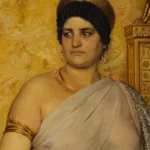
Alleged portrait of Beatrice Cenci, symbol of injustice and aristocratic crime in Renaissance Rome
In late 16th-century Rome, Count Francesco Cenci had what many people wanted: money, title, connections. He also had a reputation that made even other nobles uncomfortable. Sources describe him as violent, volatile, and spectacularly unpleasant to live with. He was accused of abusing his wives and children, including his daughter Beatrice, and of other crimes that kept landing him before the courts. Yet serious consequences somehow never arrived. Fines, brief imprisonments, quiet releases – the system seemed oddly forgiving when the accused owned enough property.
That insulation lasted until his own family snapped. In 1598, after years of reported violence and confinement, members of the Cenci household arranged his murder at their castle in Petrella Salto, northeast of Rome. The body was staged to look like an accident. It didn’t convince anyone for long. Once the authorities realised what had happened, the response was suddenly energetic.
Beatrice and several relatives were arrested, tortured, and sentenced to death. On 11 September 1599, Beatrice Cenci was executed near Castel Sant’Angelo, in full public view. She was twenty-two years old. The case caused an outcry: many Romans saw a young woman driven to desperation by a father the courts had repeatedly failed to restrain.
That’s why Beatrice Cenci still appears in guidebooks and ghost stories. She became a symbol of injustice – of a legal system that tolerated an aristocrat’s violence for years, then came down hard once its authority had been challenged. In folklore, she returns each year to the bridge, carrying her severed head. Not subtle, but Rome rarely is.
The pattern here is clear: wealth and status protected Francesco while he was the one doing the damage. When his family turned on him, the state asserted itself with theatrical severity. Public sympathy flowed not to the murdered count, but to the daughter on the scaffold. Across Renaissance Rome, you see the same tension – a Roman aristocracy whose crimes were tolerated until they threatened the hierarchy itself.
Ancient Rome: Political Power and Elite Immunity
Sejanus: Protected – Until a Letter Was Read
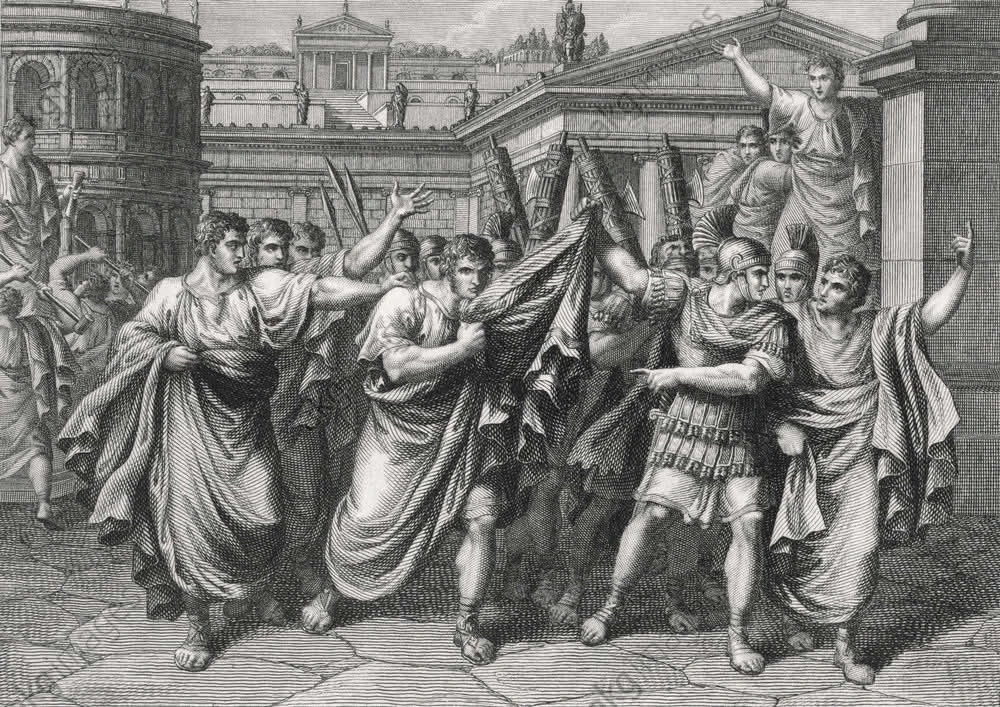
Depiction of the arrest of Sejanus in Ancient Rome, illustrating political power and sudden downfall, an etching by G. Mochetti after drawing by Bartolomeo Pinelli (Public Domain)
If the Cenci story feels like Roman corruption history in miniature, the case of Sejanus scales it up to imperial size. Sejanus was Praetorian Prefect under Tiberius, which meant he commanded the emperor’s personal guard – the armed men standing closest to power. Over time, he accumulated extraordinary influence, eliminating rivals and positioning himself as the essential man in Rome.
When Tiberius retired to Capri, Sejanus appeared untouchable. Petitions went through him. Careers depended on him. Statues were raised in public places. He looked, to many, like an emperor in waiting.
Then one day in 31 CE, the Senate gathered to hear a letter from Tiberius. Those expecting new honours for Sejanus had misread the room. The letter condemned him. The Prefect was arrested in the Senate house, executed that same day, and his body thrown down the Gemonian Steps – the notorious execution staircase overlooking the Forum.
It didn’t end there. His family and associates were systematically eliminated. Children were killed. Statues were pulled down. His name was erased from inscriptions. Even for a city accustomed to political bloodbaths, it was a performance.
Today, when guests stand above the trace of the Gemonian Steps on our Ancient Rome’s Dark Side tour, the view looks calm. But this was where the empire demonstrated that nobody was truly safe — not even the man who thought he controlled the emperor’s guard.
Patronage in Rome: How Talent Protected Criminals
Political office and aristocratic birth weren’t the only forms of insulation in Rome. Sometimes genius helped. To a point.
Caravaggio: Art, Anger, and a Death Sentence in Absentia
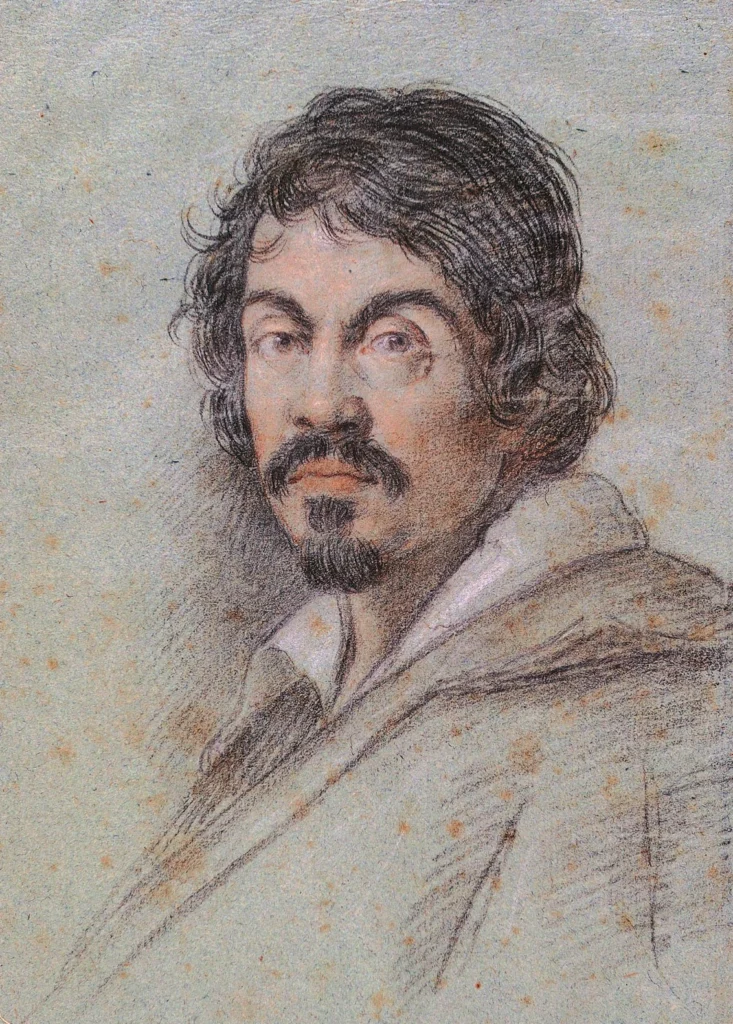
Portrait of Caravaggio, the artist whose crimes and patronage shaped his life in Rome, by Ottavio Leoni
Michelangelo Merisi da Caravaggio was not designed for a quiet life. In Rome around 1600, he was a rising star, painting altarpieces that looked startlingly real and unsettlingly alive. He was also collecting a criminal record: brawls, insults, carrying illegal weapons, assaulting a waiter with artichokes. The usual. Caravaggio’s behaviour kept attracting police attention. It also kept being forgiven, as powerful patrons such as Cardinal Del Monte appreciated both his talent and his value to the city.
That protection had limits. In 1606, during a fight near the tennis courts, Caravaggio killed Ranuccio Tomassoni. Whether it was a duel gone wrong or something uglier, the result was the same: Tomassoni died, and the painter found himself under a bando capitale – a death sentence by beheading, which meant anyone could legally kill him if he returned to Rome.
He fled Rome for the Alban Hills, then Naples, then Malta to seek shelter with the Order of Saint John. Exile, not acquittal, was the best deal available. Patronage delayed consequences. It did not erase them.
Bernini: Violence, Favour, and Unequal Consequences
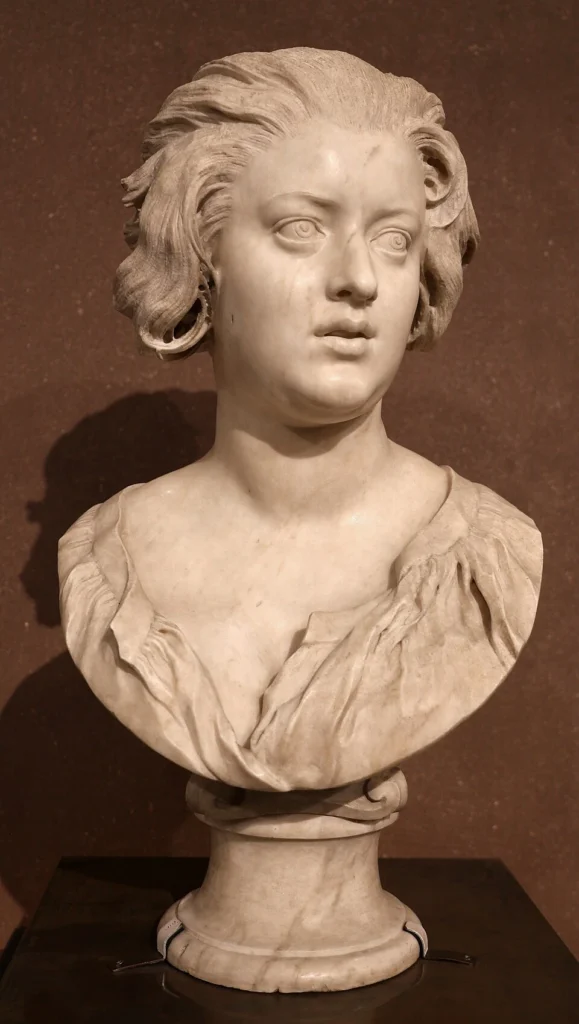
Bust of Costanza Bonarelli by Bernini, linked to one of Rome’s most notorious scandals
A few decades later, another artistic genius found himself in a different kind of scandal. Gian Lorenzo Bernini – architect and sculptor of half the Baroque city – had an affair with Costanza Bonarelli, the wife of one of his assistants. When he discovered she was also involved with his brother Luigi, subtlety left the studio.
Bernini chased Luigi through the streets with an iron bar, almost killing him inside the Basilica of Santa Maria Maggiore. He then ordered a servant to attack Costanza and slash her face, permanently disfiguring the woman whose bust he had sculpted so tenderly. She was imprisoned for months, for adultery. Bernini received a fine and, crucially, the continued favour of Pope Urban VIII, who admired his work.
The imbalance here is stark. Costanza’s world shrank to a cell. Bernini’s world remained a city he could redesign. Being useful to power could be more important than behaving well.
The Pattern of Power and Patronage Across Centuries in Rome
Across these stories – Cenci, Sejanus, Caravaggio, Bernini – the details change dramatically. The pattern is stubbornly familiar.
Influence protects. Francesco Cenci’s title bought him years of leniency. Sejanus used institutional power to shield himself. Caravaggio’s patrons cushioned his early offences. Bernini’s closeness to the papacy kept doors open.. Power consolidates. In each case, protection encouraged risk. Abuse escalated, rivals disappeared, tempers flared. When someone appears to be above the law, they tend to act like it.. Public resentment grows. Romans watched these dramas closely. Crowds pitied Beatrice Cenci and loathed her father. They rejoiced when Sejanus was dragged to the Gemonian Steps. They gossiped about artistic geniuses who behaved disastrously and seemed to pay less for it than their victims..
Then one of two things happened. Sometimes protection continued. Bernini’s story sits here. Sometimes it collapsed entirely. Sejanus fell in a single day from kingmaker to shredded corpse. Caravaggio woke up after one more fight to discover his fame no longer shielded him. The Cenci case ended in a public execution that Romans read not as the punishment of a murderer, but as the system punishing someone for making it look bad.
What Rome’s history shows is not that “the elites always get away with it.” What it shows is a repeated pattern of delay. Consequences are postponed, limited, and softened until the cost of protecting someone exceeds the benefit. When that moment arrives, justice in this city has often been swift, theatrical, and terminal.
Places in Rome Where These Dark Histories Happened
These are not abstract histories. Every event described above has a physical address in Rome – streets, bridges, and staircases that still exist today.
Castel Sant’Angelo
Beatrice Cenci was executed on the bridge in front of Castel Sant’Angelo on 11 September 1599. The castle itself served for centuries as a papal prison and one of the most feared addresses in Rome. In folklore, Beatrice’s ghost returns to the bridge each year on the anniversary of her death.
The Gemonian Steps
The Scalae Gemoniae – the Steps of Mourning – ran along the slope of the Capitoline Hill overlooking the Forum. When Sejanus fell in 31 CE, his body was thrown down these steps and left for the crowd. It was Rome’s most theatrical statement: this is what happens when protection runs out. The trace of the steps can still be located today on our Dark Side of Ancient Rome tour.
Campo de’ Fiori
One of Rome’s most famous piazzas was also one of its most active execution sites. Giordano Bruno – philosopher, heretic, and one of Rome’s most persistent intellectual troublemakers – was burned alive here in 1600. His statue stands in the square today, facing the Vatican. The expression on his face says everything about Rome’s long memory.
Piazza Navona
Bernini’s Fountain of the Four Rivers dominates this square – one of his greatest works, commissioned by Pope Innocent X. It was completed just a few years after the Costanza Bonarelli scandal. The fountain stands as a monument to the principle that, in the right hands, talent can outlast almost anything.
These stories are not sealed in museums. Many of the locations where they unfolded are still part of daily Roman life. Piazzas, bridges, and staircases that tourists walk past without knowing what happened there. Our Rome Ghost Tour visits several of them after dark, when the city tells a very different story.
Why Stories of Roman Elites and Justice Still Endure
Why are people still talking about Sejanus, about Beatrice Cenci, about the ghosts said to walk bridges and palaces centuries later? Part of it is simple drama. Humans are naturally interested in the rise and fall of the powerful. We enjoy watching the person who seemed untouchable discover that they were, in fact, quite touchable.
But there’s more going on. These stories hold a mirror to the moral tension around justice. The Cenci legend sits exactly on that fault line: a daughter framed as both murderer and victim. Caravaggio’s life raises the question of how much bad behaviour society tolerates from someone whose work it admires. Sejanus’ arc captures the terror of living under a regime where the same emperor who shielded you yesterday might condemn you today.
If you stand at night near Castel Sant’Angelo, or above the trace of the Gemonian Steps, or in front of the bust of Costanza Bonarelli, you’re not just looking at stones and marble. You’re standing in places where the city once tried to convince itself that justice had been done, or at least seen to be done.
Rome, Memory, and the Question of Immunity
Recent high-profile scandals and angry conversations about accountability feel very current. They are. They also sit in a tradition that stretches back through emperors, nobles, artists, and popes. Rome has seen this before. It has seen people treated gently because they were useful, terrifying, well-connected, or simply entertaining. It has seen public resentment simmer when justice felt uneven. And it has seen protection collapse in ways that left marks on bridges, staircases, and skulls.
History suggests that power can delay consequences. It can distort them. It can sometimes avoid them for a lifetime. But in this city, at least, it rarely erases them. The stories linger. The names stick. The ghosts – metaphorical or otherwise – are stubborn.
If you’d like to walk these histories in the streets where they unfolded, our Rome Ghost Tour and our Dark Side of Ancient Rome tour follow the paths of emperors, artists, and families who learned the hard way that immunity is often an illusion. In Rome, power may bend the rules for a while. But the city has a long memory. And history, inconveniently, keeps the receipts.
FAQ: Dark Stories from Roman History
Why was Beatrice Cenci executed?
Beatrice Cenci was executed in 1599 for the murder of her father, Francesco Cenci, after years of reported abuse. The case became a cause célèbre in Rome: many believed she was a victim of her father’s violence, who had been failed repeatedly by the courts. Pope Clement VIII refused to grant clemency, and Beatrice was beheaded near Castel Sant’Angelo at the age of twenty-two. Romans wept at her execution. Her father’s earlier crimes, by contrast, had attracted little official response.
Who was Sejanus in Roman history?
Lucius Aelius Sejanus was Praetorian Prefect under the emperor Tiberius – effectively commander of the imperial guard and, for a period, the most powerful man in Rome after the emperor himself. He used his position to eliminate rivals, accumulate influence, and position himself as indispensable. His fall in 31 CE was abrupt: Tiberius sent a letter to the Senate condemning him, and Sejanus was arrested and executed the same day. His body was thrown down the Gemonian Steps, and members of his family were subsequently killed.
Why did Caravaggio flee Rome?
Caravaggio fled Rome in 1606 after killing Ranuccio Tomassoni during a brawl near a tennis court. He was placed under a bando capitale – a capital sentence that meant any citizen could legally kill him on sight if he returned to the city. Despite being one of the most celebrated artists in Rome, his patronage network could not protect him from a charge of murder. He spent the rest of his life in exile, moving between Naples, Malta, and Sicily, and died in 1610 without ever returning to Rome.
Was Bernini ever punished for his crimes?
Bernini faced minimal consequences for ordering the disfigurement of Costanza Bonarelli and attacking his brother Luigi. He received a fine and briefly lost papal favour, but Pope Urban VIII, who considered Bernini essential to the beautification of Rome, continued to support him. Costanza Bonarelli spent months in prison. Bernini went on to complete the Fountain of the Four Rivers, the Colonnade of St Peter’s, and dozens of other commissions. The disparity in consequences was not lost on contemporary Romans.
What were the Gemonian Steps?
The Gemonian Steps (Scalae Gemoniae) were a flight of stairs on the Capitoline Hill in ancient Rome, leading down toward the Forum. They served as an execution site and a place of public humiliation: the bodies of condemned criminals and political enemies were thrown down the steps and left exposed before being dragged to the Tiber. The steps were used most notoriously during the reigns of Tiberius and Caligula. Throwing someone’s body down the Gemonian Steps was Rome’s way of making a point.
Do powerful people ever really face consequences?
Rome’s history suggests the answer is: eventually, sometimes, and usually only when the cost of protecting them exceeds the benefit. Sejanus was untouchable — until the emperor decided he wasn’t. Caravaggio was forgiven repeatedly – until one crime too many. The Cenci family’s violence was tolerated for years, until it became a public scandal that the courts couldn’t ignore. The pattern is less about justice and more about when the powerful become inconvenient. Rome has been running this experiment for two thousand years. The results are instructive.