
Is Rome haunted? Yes. Quite badly, really.
By day, Rome is all fountains, polished stone, and people spending suspicious amounts on tiramisu with a view. It looks civilised. Then evening arrives, the streets empty a little, and the city starts feeling more honest. That is when the ghost stories stop sounding decorative and start sounding plausible.
Which is not surprising. Rome has had nearly 3,000 years to accumulate murder, plague, execution, betrayal, imperial tantrums, papal corruption, and enough public suffering to keep several afterlives busy. A city with that much history was never going to produce only church domes and flattering postcards. It was always going to produce ghosts.
And according to local legend, Roman tradition, and the stories still attached to specific bridges, streets, hills, prisons, and ruins, it has. Haunted Rome is not built on vague folklore. The best Rome ghost stories are tied to names, dates, scandals, and very precise locations. If you want to experience those stories where they actually happened, our Rome Ghost Tour follows the city’s darker side after sunset, which is when Rome becomes less charming and more accurate.
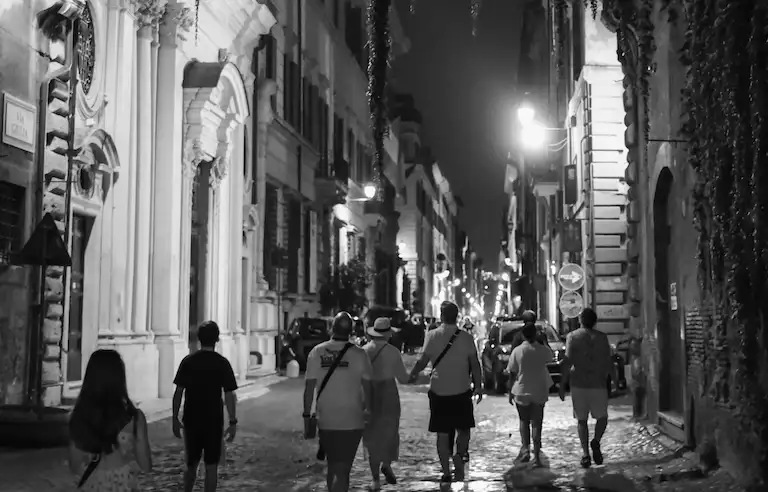
Why Does Rome Have So Many Ghost Stories?
Because Rome never did anything quietly.
This is a city that has been continuously inhabited for almost three millennia. That means three millennia of rulers, uprisings, spectacles, conspiracies, martyrdoms, executions, betrayals, wars, and public punishment. Most cities have dark periods. Rome turned them into infrastructure. The layers are not metaphorical. They are physical. Churches rise over temples. Streets cross over graves. Palaces sit on older ruins. Catacombs run below the roads. Bone crypts are presented with unsettling confidence, as though everyone should find this entirely reasonable.
Then there is Rome’s long relationship with death as public theatre. For centuries, punishment here was not hidden away behind clean walls and careful language. It was visible. Romans saw beheadings, burnings, hangings, torture, bodies displayed as warnings, and prison systems that treated human suffering as part of civic order. The Gemonian Steps in antiquity, the execution grounds of papal Rome later on, the prisons, the scaffold sites, the bridges outside fortress walls. All of it taught the city to think of death not as private, but as staged. That tends to leave an atmosphere.
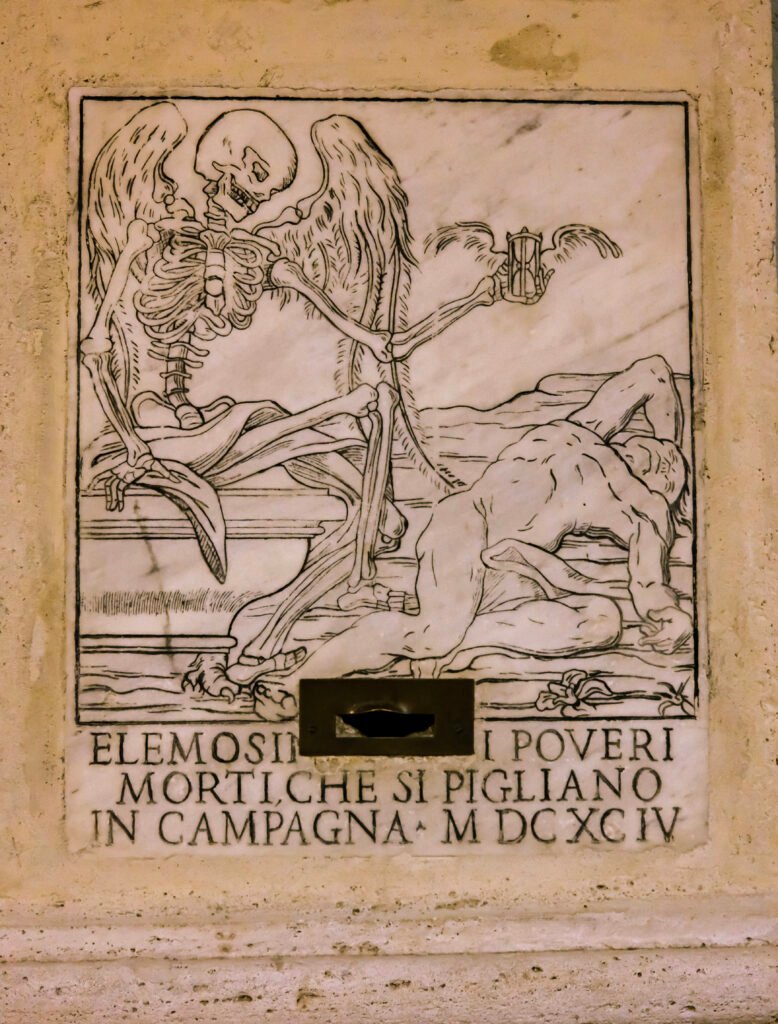
Reminders of mortality are all around you in Rome, such as on the Chiesa dell’Orazione e Morte, as seen on our Rome ghost tour
The Catholic imagination did not exactly reduce the tension. Rome is a city of saints, relics, miracles, martyr cults, visions, exorcisms, devils, incorrupt remains, and chapels lined with bones. The line between living and dead was never meant to stay tidy here. The supernatural was not fringe material. It was part of the local architecture of belief. Add unlit alleys, plague history, ruined amphitheatres, and enough badly buried trauma to keep folklore employed indefinitely, and the real surprise would be if Rome had no ghost stories at all. So is Rome haunted? Given the ingredients, it would be stranger if it were not.
That is why a proper ghost tour in Rome works so well. The city has already done most of the writing. We are simply walking through the evidence.
The Ancient Ghosts of Rome
The older ghosts are, predictably, some of the most persistent. Rome’s ancient dead had status, enemies, and truly spectacular endings. Good ingredients for a haunting.
Nero at Piazza del Popolo
If one former emperor was always going to remain difficult after death, it was Nero.
After his suicide in AD 68, Nero was subjected to damnatio memoriae. Rome did not merely want him gone. It wanted him erased. Naturally, that did not take. According to legend, he was buried on the Pincian Hill near what is now Piazza del Popolo, and the site quickly developed a grim reputation. Locals spoke of crows, screams, demonic apparitions, and a cursed walnut tree growing above his grave. It was not, apparently, a pleasant stroll.
The story goes that Pope Paschal II finally intervened by cutting down the tree, having Nero’s bones exhumed and thrown into the Tiber, and building a church on the site to settle the matter. That church became Santa Maria del Popolo. It is a very Roman solution to a supernatural problem: prayer, demolition, then architecture. Some say it worked. Some say Nero still lingers around the hill. He was never known for taking the hint.
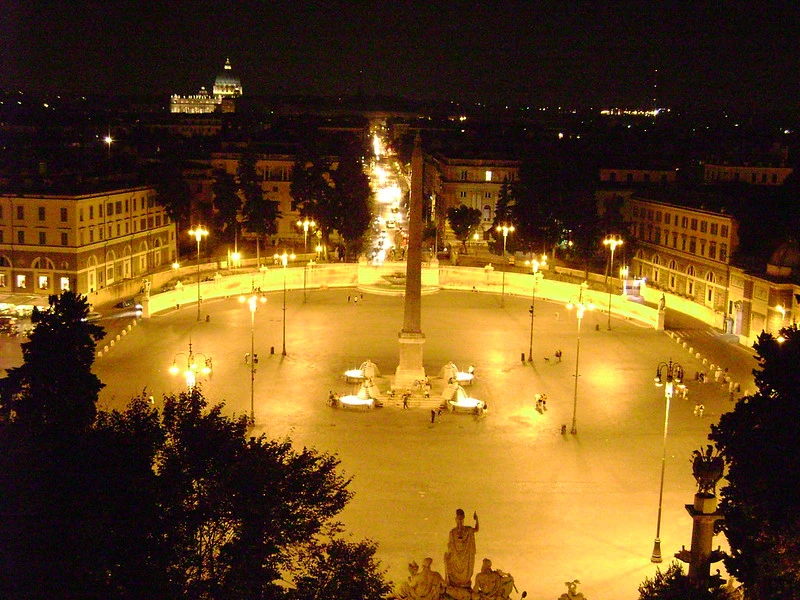
Piazza del Popolo
Image cred“Piazza del Popolo di notte” by Fabio Spinozzi (gattospino), via Flickr, licensed under CC BY-ND 2.0.
Messalina in Monti and Colle Oppio
Messalina, wife of Emperor Claudius, is one of Rome’s most durable female spectres. Executed at just 23 after scandal and conspiracy, she was transformed by Roman writers into a byword for excess, desire, and imperial disgrace. Rome has always been very efficient at turning women into cautionary tales.
Her ghost is not confined to one neat spot. She is said to haunt Monti, once part of the ancient Suburra, where she allegedly wandered by night in life and where some say her veiled figure still walks the streets. She is also tied to Colle Oppio, near the Colosseum, where she reportedly appears in white, glittering with jewels, still searching for a lover. So the story belongs to both landscapes: Monti, with its old vice-ridden history, and the Colosseum area, where imperial spectacle and death still hang in the air.
That matters, because it makes Messalina feel less like a tidy legend pinned to a tourist landmark and more like a ghost diffused through the neighbourhoods that suit her reputation. She belongs in the ruins and in the old streets alike, which is very convenient if one wants to remain unsettling over several centuries.
Renaissance and Baroque Rome: Better Records, Same Behaviour
If ancient Rome gave the city emperors and scandal, later Rome supplied prisons, papal cruelty, social climbing, and hauntings with far better documentation.
Beatrice Cenci at Castel Sant’Angelo and Ponte Sant’Angelo
If Rome has one ghost that people know by name, it is Beatrice Cenci.
Born in 1577 into a noble Roman family, Beatrice was the daughter of Count Francesco Cenci, a man remembered for shocking violence even by the standards of his own time. He beat his sons, raped Beatrice and his wives, terrorised the household, and escaped consequences for years because he was rich, connected, and friendly with the Pope. Complaints were ignored. Rome has always had that problem.
Eventually, Beatrice, her stepmother Lucrezia, and others in the family became involved in Francesco’s murder. The attempt to poison him failed, so they took a more direct route, driving an iron nail through his skull and throwing the body from a balcony to make it look accidental. The cover-up collapsed. The family was arrested, imprisoned, tortured, and condemned. On 11 September 1599, despite enormous public sympathy, Beatrice was executed near Castel Sant’Angelo, at the edge of Ponte Sant’Angelo, one of the city’s great execution zones. According to tradition, Caravaggio was in the crowd. Rome did not let a public tragedy go under-attended.
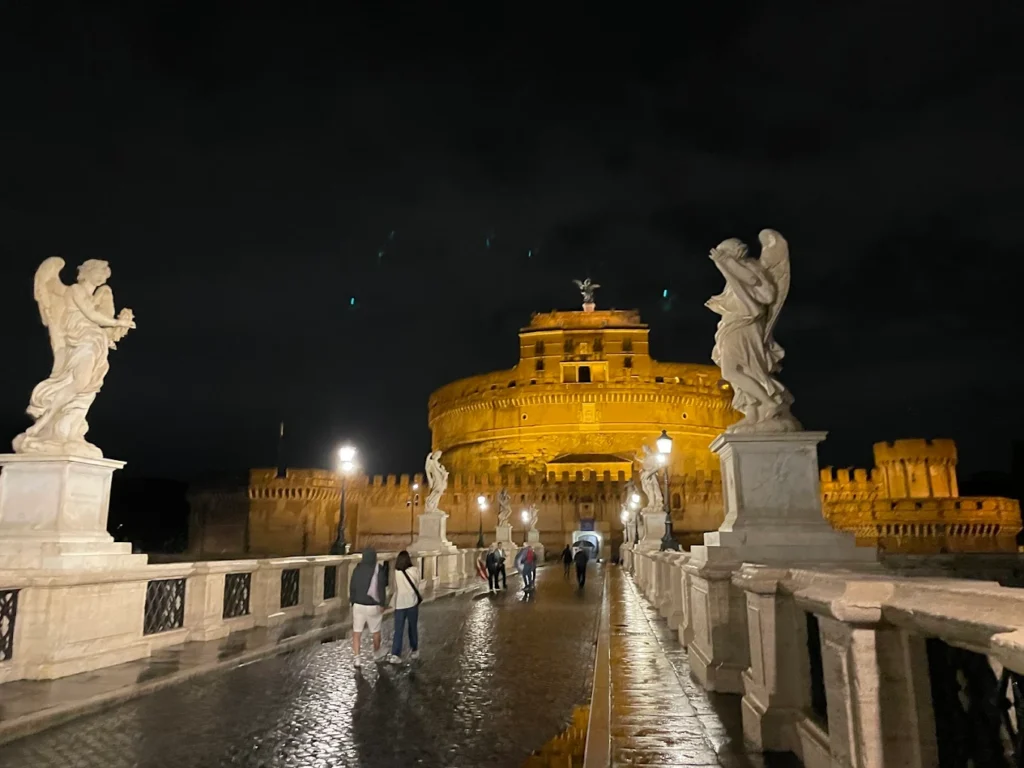
Ponte Sant’Angelo, leading to Castel Sant’Angelo, the site of the Cenci’s executions, amongst many, many others.
Photo by Rome ghost tour guest Heather Lusty
Her haunting belongs to the whole Castel Sant’Angelo and Ponte Sant’Angelo area, not just the bridge in isolation. That makes more sense anyway. The castle was a papal fortress and prison. The bridge outside it became one of Rome’s major execution sites. The story is spatially whole: imprisonment inside, death outside, memory all over it. Each year, legend says Beatrice returns dressed in white, carrying her severed head, walking through the area on the anniversary of her execution. It remains Rome’s most famous ghost story because it is not just gruesome. It is unfair, and the city still seems to know it.
We tell her story on our Rome Ghost Tour, because this is one of those Roman legends that only fully lands when you are standing there at night with the fortress looming over you like a very expensive mistake.
Donna Olimpia at Ponte Sisto
If Beatrice haunts Rome because she was wronged, Donna Olimpia haunts it because nobody ever forgave her.
Olimpia Maidalchini rose from modest origins to become one of the most powerful women in Rome through her connection to Pope Innocent X. Popular memory cast her as greedy, manipulative, politically ruthless, and entirely comfortable with all three. The Romans nicknamed her La Pimpaccia, which was not an affectionate civic honour. According to legend, when Innocent X died, she fled with chests of gold and left others to sort out the unpleasant business of his funeral. Touching loyalty.
Her ghost is said to appear every 7 January, racing across Ponte Sisto in a black carriage engulfed in flames before plunging into the Tiber. It is one of Rome’s great vindictive hauntings: theatrical, specific, and very pleased with itself. You can tell a lot about a city by the punishments it invents for the dead. Rome tends to favour spectacle over restraint.
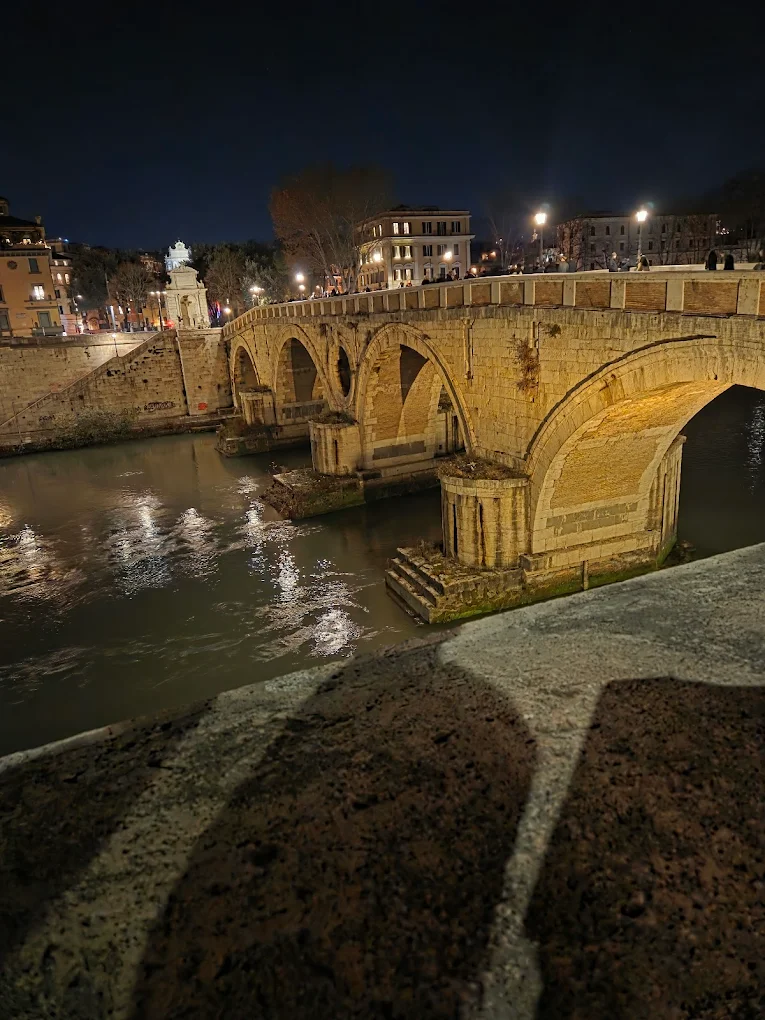
Ponte Sisto at night, image by Rome ghost tour guest Hannah I
Cagliostro in Vicolo delle Grotte and the Spanish Steps
For a haunting with more fraud, occult posturing, and relationship failure, Rome offers Count Cagliostro.
Real name Giuseppe Balsamo, Cagliostro reinvented himself as an alchemist, Freemason, mystic, and professional liar with ambitions above his station and ethics below street level. He and his wife Lorenza spent years grifting their way through Europe before returning to Rome broke, cornered, and making poor decisions. He pushed Lorenza back toward prostitution, she betrayed him to the authorities, and he was arrested at the Spanish Steps before dying later in solitary confinement. Rome was not generous with failed charlatans.
The ghost story is better than the man deserved. On moonlit nights, Cagliostro is said to appear in Vicolo delle Grotte, crying out for Lorenza outside the old brothel he once frequented. Lorenza’s own spirit is said to wander near the Spanish Steps, where he was caught, trying to warn him but never reaching him in time. It is bleak, a little ridiculous, and exactly the sort of legend Rome would preserve: doomed lovers, mutual betrayal, and an afterlife built around terrible personal choices.
Haunted Rome Is About Places as Much as People
One reason the answer to ‘is Rome haunted’ feels so immediate is that the stories remain attached to places you can still visit. The city has not sealed them away or built polite little detours around them. It has simply gone on living with them, which may be the most Roman thing imaginable.
Piazza del Popolo remains linked to Nero and the cursed burial site beneath the walnut tree. Monti and Colle Oppio keep Messalina in circulation, split between the old Suburra and the ruins near the Colosseum. Castel Sant’Angelo and Ponte Sant’Angelo remain the emotional centre of Beatrice Cenci’s story, because prison, execution, and haunting all converge there. Ponte Sisto belongs to Donna Olimpia’s flaming carriage. Vicolo delle Grotte and the Spanish Steps still carry Cagliostro and Lorenza, two people who managed to ruin each other with impressive efficiency.
So, Is Rome Haunted?
Yes. But not in a silly way.
Is Rome haunted? Yes – because too much happened here, too publicly, for the city ever to feel entirely finished with its dead. Its ghost stories are not random decorations stuck onto attractive streets. They are attached to real violence, real scandal, real punishment, and real places where people still swear something lingers.
An emperor condemned and still restless. An empress walking Monti and Colle Oppio long after execution. A noblewoman returning to the castle and bridge where Rome killed her. A papal schemer still making an entrance on Ponte Sisto. An alchemist still crying for the wife who betrayed him. None of it sounds especially healthy, but then Rome has never really aimed for healthy. It has always preferred memorable.
The best way to understand that is to see the city after dark, when the daytime gloss wears off and the older stories begin to fit properly. Join Dark Side City Tours’ Rome Ghost Tour and meet the version of Rome that behaves less like a museum and more like a witness. It has seen things.
Frequently Asked Questions About Haunted Rome
Is Rome really haunted?
Many Romans believe so. The city has nearly three thousand years of history filled with executions, scandals, and violent deaths. Stories of ghosts such as Nero, Messalina, and Beatrice Cenci are attached to real locations that can still be visited today.
What is the most haunted place in Rome?
Castel Sant’Angelo and Ponte Sant’Angelo are often considered among the most haunted locations in Rome due to the execution of Beatrice Cenci in 1599. Other places linked to ghost stories include Piazza del Popolo, Monti, Colle Oppio, and Ponte Sisto.
Are there ghost stories about the Colosseum?
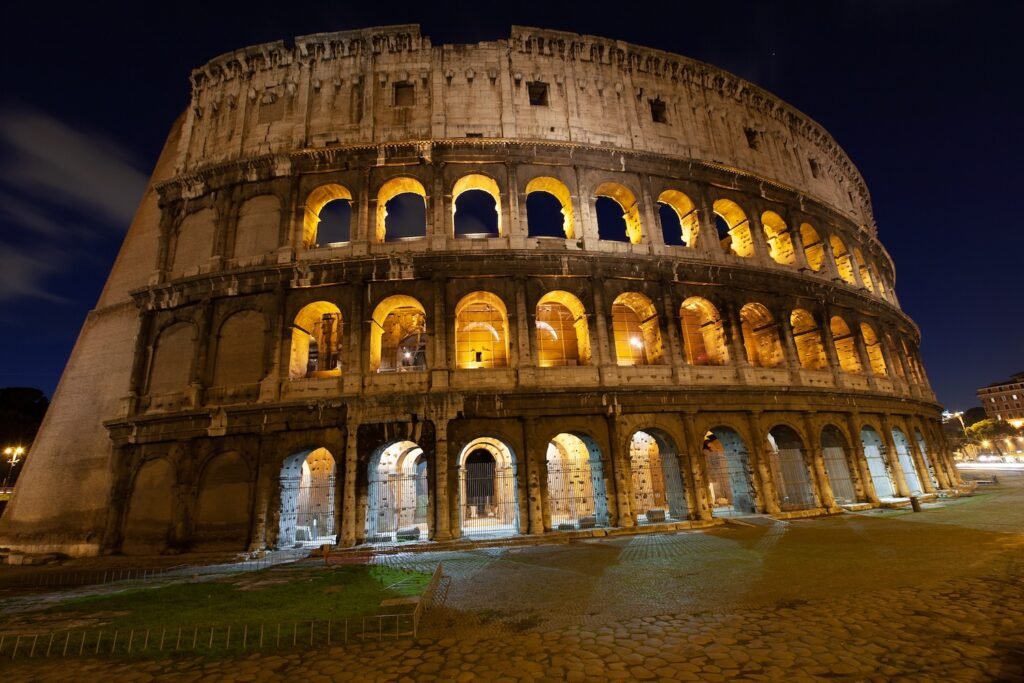
Yes. The Colosseum and nearby Colle Oppio are associated with stories of restless spirits tied to gladiatorial deaths and imperial intrigue. One legend claims the ghost of Messalina, the wife of Emperor Claudius, still wanders the nearby ruins.
Who is the most famous ghost in Rome?
Beatrice Cenci is often considered Rome’s most famous ghost. Executed near Castel Sant’Angelo in 1599, legend says she returns each year on the anniversary of her death, walking through the area carrying her severed head.
Can you take a ghost tour in Rome?
Yes. Several tours explore Rome’s darker history after sunset. Our Rome Ghost Tour follows the city’s haunted streets, revealing the real stories behind legends such as Nero, Donna Olimpia, and Cagliostro. Our Ancient Rome Ghost Tour explores the ghosts of the Emperors and their wives, and others who met unfortunate fates 2000 years ago